
Holidays and Traditions
Unitarian Universalists (UUs) honor and celebrate a wide range of holidays and occasions over the course of a year, which reflect the Six Sources of our faith.
Unlike other faith traditions that use a single lectionary (a collection of scripture readings appointed for a given day or occasion), the topics and themes for Unitarian Universalist worship services are usually chosen independently by worship leaders in congregations.
Many Unitarian Universalists (UUs) and our congregation celebrate holidays like Christmas, Easter, Passover, and Winter Solstice, among others. Our holiday services use the stories and traditions creatively, calling us to our deeper humanity and our commitment to the good. In addition to religious holidays, UUs also honor secular holidays including Earth Day, Martin Luther King Jr. Day, Labor Day, Indigenous Peoples Day, and Thanksgiving. These include unique UU traditions, like the Flower Ceremony and the Water Communion.
St. Valentine’s Day
Driven by the firm conviction that every person deserves recognition of their inherent worth and dignity, UUs reach out, affirm and embrace each other in compassion, while simultaneously working to ameliorate situations where people are being denied their humanity.
Easter
For many Unitarian Universalists, the resurrection narrative is often more metaphorical than literal. We celebrate Easter by discussing different types of resurrection: rebirth of nature; resurrecting dreams and hopes; resurrecting dead relationships. Sometimes we discuss the pagan origins of the holiday.
Flower Ceremony
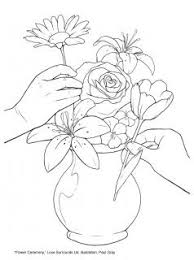
The first Flower Ceremony was held in Prague, on June 24, 1923, led by Rev. Norbert Čapek. For decades, this beloved tradition and its powerful history have provided meaning to hundreds of UU congregations. Celebrated in the spring, our congregation holds the Flower Ceremony by gathering all the flowers that each member has brought, then blessing the bouquet. Each person then receives a different flower than what they brought, without regard for where they came from or who had brought them. Through the Ceremony, we are reminded that many different flowers can make a beautiful bouquet, and many different people can make a community. All have value and all are important.
Water Communion
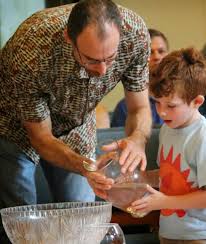
The Water Communion, also sometimes called Water Ceremony, was first used at a Unitarian Universalist (UU) worship service in the 1980s. Many UU congregations, including this one in Livermore, now hold a Water Communion once a year, at the beginning of the new church year in September.
Members bring a small amount of water from a place that is special to them to the service, and during the appointed time in the service, people one by one pour their water together into a large bowl. As the water is added, the person who brought it tells why this water is special to them. The combined water is symbolic of our shared faith coming from many different sources. It is then blessed by the congregation and later re-used in the garden.
Winter Solstice
Winter Solstice is the shortest day and the longest night of the year. Traditionally, it is a time of both foreboding and expectancy, as the longest night leads to the return of the sun. We typically celebrate it with the promise of new life and recommit ourselves to the protection of everyone’s right to his or her own radiant humanity and express our commitment to our Sixth Principle, “We covenant to affirm and promote the goal of world community with peace, liberty and justice for all.”
Christmas
Christmas Eve is December 24, and is frequently celebrated in an evening service. It often includes “lessons and carols” and sometimes a story that conveys the spirit of Christmas. Our congregation includes a candle-lighting ritual in the service. Unlike many Christian faiths, Unitarian Universalists rarely hold special services on Christmas Day, December 25.